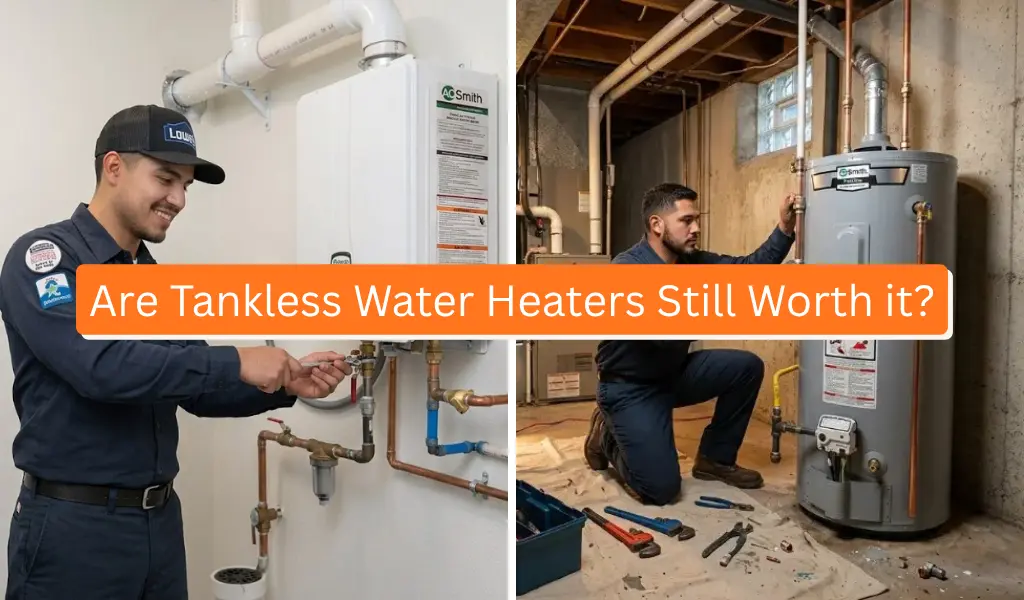
Everybody is Asking: Are Tankless Water Heater’s worth it?
Let’s get this out of the way first: nobody wakes up excited to think about their water heater. It’s the appliance equivalent of a smoke detector — you don’t know it exists until it starts screaming at you at the worst possible moment, usually mid-shampoo, usually on a Monday.
But if your old tank just gave out, or you’ve noticed your teenager’s forty-minute showers are starting a cold war with everyone else in the house, you’ve probably landed on the same question we hear constantly: is a tankless water heater actually worth the money, or is it just a shiny upsell?
Short answer: for a lot of North County homes, yes. Long answer, with actual numbers, below.
What Tankless Actually Means (in Plain English)
A traditional tank water heater keeps 40-50 gallons of water hot and ready 24/7, whether you’re using it or not — kind of like leaving your oven preheated all day just in case you feel like baking. A tankless unit skips the storage entirely and heats water on demand, right as it passes through. No tank, no standby heat loss, and — this is the part people actually care about — no running out of hot water halfway through the second shower.
What it Actually Costs
Here’s where a lot of online cost guides get vague on purpose, so let’s not do that.
Traditional tank replacement: roughly $800–$1,500 installed, for a standard gas tank. Cheaper upfront, no argument there.
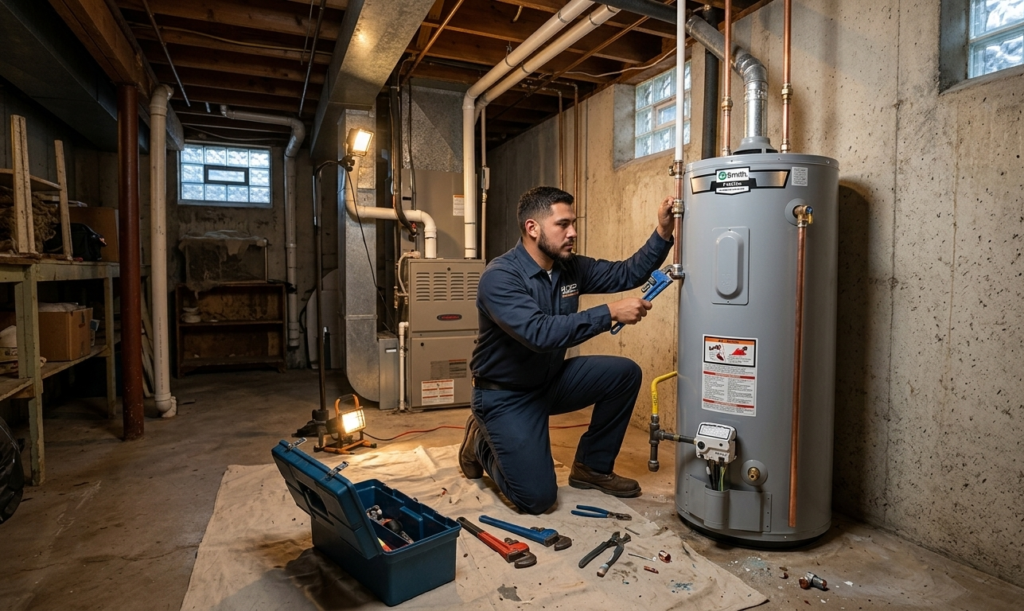
Tankless installation: roughly $1,500–$3,500+, depending on unit size, whether your gas line needs upgrading, and whether new venting is required. If you’re going from tank to tankless for the first time (versus tankless-to-tankless), expect to land toward the higher end — that first conversion usually involves more than just a straight swap.
That gap is real, and we’re not going to pretend it isn’t. But it’s also not the whole story.
The Math People Usually Skip..
A tank water heater is basically running a small pilot light of energy loss all day, every day, just to keep water warm you’re not using yet. Tankless units only fire up when you turn on a tap, and that efficiency adds up — SoCalGas estimates a tankless upgrade can save a household somewhere in the ballpark of $1,500 over its lifetime versus a standard tank, and that’s before rebates.
Speaking of which: SoCalGas currently offers rebates for qualifying ENERGY STAR-certified tankless units, with the amount depending on the unit’s efficiency rating. It’s not a massive check, but it’s real money for filling out a form, and it’s worth checking current rebate amounts at socalgas.com/rebates before you buy — those numbers move around year to year.
Then there’s lifespan. A tank water heater typically lasts 8-12 years. A well-maintained tankless unit routinely goes 15-20. You’re not just buying more hot water — you’re buying roughly one fewer “surprise, your water heater died” phone call per decade.
Is it Actually Worth it For Your House?
This is the part that depends on your specific home, not a national average.
If you’re in a newer North County build — think Bressi Ranch, Robertson Ranch, some of the newer construction in Escondido and San Marcos — your home is often already set up well for tankless. Newer gas lines and layouts make the install cleaner, which keeps costs closer to the lower end of that range.
If you’re in an older home, particularly closer to the coast or in an established neighborhood with original plumbing, the install can run higher because of gas line or venting upgrades — but those homes are also often the ones with the smallest, most tired old tanks, so the upgrade tends to feel more dramatic day to day.
If you’ve got a big household — multiple bathrooms, teenagers, a dishwasher and washing machine running while someone’s in the shower — tankless solves a real, daily annoyance. If it’s just you and quiet mornings, the math is less urgent, and a straightforward tank replacement is a perfectly reasonable call.
One more North County-specific note: coastal areas tend to have harder water, and hard water is tougher on any water heater, tank or tankless. If you’re closer to the coast, factor in a flush/maintenance schedule either way — it protects whichever system you choose.
Which Brand We Actually Recommend?
We install Navien tankless systems for most of our tankless conversions — we’ve found them reliable in real North County homes, not just on a spec sheet. We’re happy to walk you through options if your situation calls for something else, but if you ask us point blank what we’d put in our own house, that’s it.